Go to Main Menu Fitness - main menu Bodyworks menu Test Yourself menu Workouts menu Aerobic Strength Stretching menu Techniques Body Warmers

The Fitness Test Stage 2

With these tests make sure you are both honest and accurate with your recordings, and remember to keep notes of all your results. The best way to get accurate results is to see your doctor, join a gym or hire a personal trainer. 

Work within your own limits when doing the test, you don't need to do all of them, as a reasonable fitness level is required for some of the tests.


TEST 1 RESTING HEART RATE
The best time to take this is when you first awake in the morning, as this is when you're at rest. If you can take the recordings over three days to find an average, this will give you a more accurate reading.

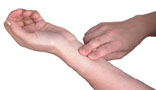
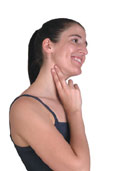
Place two fingers on either your wrist (radial artery), or neck (carotid artery). Avoiding pressing too hard, count the number of beats for a minute. Alternatively, if you have one a heart rate monitor will give you an accurate reading.

Look in the heart rate chart, to give yourself a guideline.

RADIAL ARTERY
CAROTID ARTERY


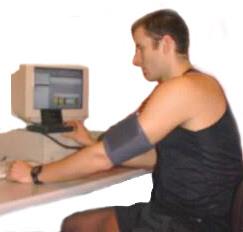
Test 2 (Blood pressure)
Having your blood pressure taken is a very easy operation, however make sure that the equipment used and the person taking the reading knows how to do it. Some electrical machines have been shown to be inaccurate.

Most doctors / health clinics should be happy to test you.

Test 3 (Lung size)
Used to measure the size of your lungs, peak flow meters give a good indication at the size of your lungs. Most doctors and good health clubs should be able to offer this service. If you can't get a reading don't be too concerned; as general exercise will increase your lung capacity, likewise smoking and inactivity contribute to both poor and smaller lung capacity.


Test 4 (Body fat percentage)
The static water tank is the most accurate, but is also the least practical. Aim to use a bio-impedance machine or have a qualified instructor measure you with body calipers. 

Avoid weighing yourself on a daily basis, all you are doing is measuring fluctuations in your bodies water and glycogen content.


Test 5 (Flexibility)
Poor flexibility is normally a result of tight muscles, which in turn can lead to injury. Test yourself by placing your feet flat against a low table, and aim to push a pencil smoothyly acorss the table surface. Measure how far you can either slide the pencil, or how far away from the table you are poor flexion.


Test 6 (Upper body strength) Work within your limits!
Press-ups are an excellent way of judging a persons upper body strength. Remember that as you get fitter and stronger, the press-up style may need to change, bare this in mind when choosing your style. Count how many press-ups you can do in a minute, look in the press up workout for advice. Men should aim for full press-ups and women box / 3/4.


Test 7 (Abdominal) Work within your limits!
Read notes on abdominal exercises in Bodyworks prior to doing this test. Lie flat on the floor with your lower legs close to your bottom, locking hands behind the head, sit up no more than 30 degrees, lower then repeat. Work in a smooth motion, and then record how many sit-ups you can do, without stopping.


Test 8 (Leg Strength) Work within your limits!
Time yourself with your back pressed into the wall, and your legs bent at 90 degrees.

Keep your feet firmly on the floor, making sure that the surface is not slippery.

Having a chair by your side will aid you to come up, use your hands to push yourself up when you have finished.

Aim to keep your hands off your legs throughout the exercise.


Test 9 (Explosive power) Work within your limits!
From a squatting position on the ground, jump up as high as possible, holding a piece of chalk in one hand. Aim to make a mark on a wall, at the top of your jump, try three times, and measure the highest marking.


Test 10 (Speed) Work within your limits!
From a standing start, have a partner blow a whistle, and three seconds later blow again. In this time you will want to aim to run as fast as you can over a flat surface. Have a spotter judge where you ran to over the three seconds. Chalk a line across that point, and aim to beat it with two more attempts. Record the distance to your furthest chalk line.


Test 11 (Aerobic 12 minute run) Work within your own limits!
Accurately measure how far you can run ideally on a running track or treadmill. If you have to run on the road, make sure that next time you repeat the test, you use the same route. Measure the distance on the road by either a car or bicycles odometer. Avoid routes with road crossings, train barriers etc.


Test 12 (Balance) Work within your limits!
On a flat surface draw a total of 12 circles, 1 inch larger than your shoe size. They need to be stride apart, and running at right angles to each other in a zig zag line. Hop on one leg, staying on your toes the whole time, from circle to circle. Time yourself to go up on your left, and then back on your right leg 3 times. Each time you miss the circle, or put your other foot down add 3 seconds to your time.

Foam pads make it harder, and should only be used by persons of a good fitness level.

Remember to record all of your scores, and judge how you done using the fitness scoring chart. Repeat the tests every 6 / 8 weeks, to monitor your improvements.

Becoming a Netfit member is a good way to help you improve, and stay motivated. 

Once you have your results, you then have a benchmark to work from. Analyze each area of the fitness test, and aim to improve on all areas, especially the ones that you may be weak on.

Printing off the scoring charts will give you guidelines of what you will need to aim for. 

Good training, hope you enjoy the tests!

Go back to the previous pageGo to the top of this pageGo on to the next page


Additional resources :
Cardio exercises
Fitness training
Fitness exercises
Fitness
Fitness tips
Stretching
Strength training
Test your fitness
Warm-up exercises